


Interactive Phenakistoscopes
Last year I began exploring phenakistoscopes - Images that become animated when rotated by a specific amount. The physical version of this - invented in 1832 - is the earliest known form of animation: a wheel with slits that creates the illusion of movement when spun in front of a mirror.
My own versions take the form of imaginary creatures: static mandala-like drawings that come to life when animated by rotation. So far I have presented these works as hand-drawn digital animations, and I'm now preparing to bring them into physical form at scale.
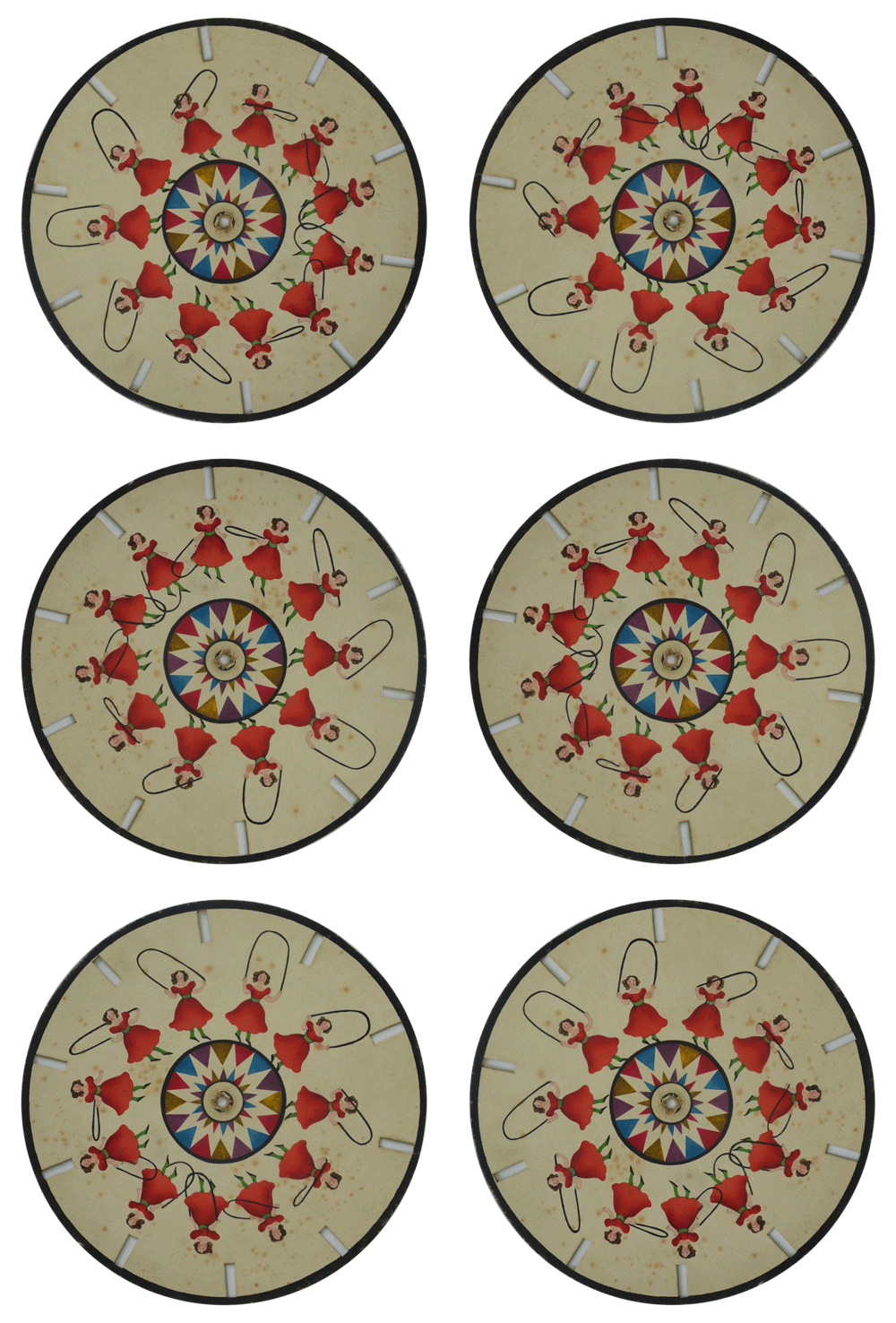
Example of a classic physical phenakistoscope
Some pieces I have made so far:


Augmented Reality

Click to play
I have experimented with Augmented Reality to animate these pieces in print. Responses have been very positive - as they are drawings, people don't expect them to be animated! However I've found using a phone app feels clunky and breaks immersion. I'd like to create experiences that pull people away from their phones, rather than towards them.
Expanding
I plan to expand this concept by physically bringing the phenakistoscopes to life using motors and strobes, while also using RGB lights and colour theory techniques to transform the image as the hue shifts.
The animations will also behave differently at varying rotation speeds - certain elements will appear static at certain speeds, deepening the illusion. To make the experience fully interactive, I plan to incorporate physical controls to adjust speed and light colour/patterns. I believe by combining all these elements I will create a truly unique and mystifying analogue experience that will engage curiosity and spark conversations/connection between viewers
Light-reactive/Variable speed examples
Here are 2 examples that demonstrate how the effects could work:
Light-reactive layers: Here I have overlaid 3 previous animations in seperate RGB layers and simulated RGB lighting to show how a light-reactive phenakistoscope could work.
Clip 1 shows the piece under white light, Clip 2 cycles through red, green and blue light, and Clip 3 simulates a cycling LED perimeter pattern.
Variable speeds: The second video shows how a piece can change when animated at different speeds. Certain elements remain static at specific rotation speeds
Light-reactive layers

Through the skills I gain in creative electronics/microcontrollers I plan to make these elements controllable by the viewer, allowing each person to shape their own experience. I want to keep the mechanics mysterious, encouraging people to puzzle out what is happening by themselves, or by connecting with others around them. I'm also open to new interaction methods that may emerge during the process, such as gesture/sensor based controls
Variable speeds
